Orbital and palm sanders can be used for various tasks, such as removing paint or varnish, smoothing wood, or sanding metal. There are some similarities between the two, but also some crucial differences that should be considered when deciding which sander to use.
Orbital sanders are great for larger surfaces, as they cover more ground quickly. They also create less dust than palm sanders, making them a better choice if you work in a confined space. However, they can be a bit more challenging to control and can cause damage if used too aggressively.
Palm sanders are smaller and more maneuverable, making them ideal for smaller projects or tight spaces. They also produce less dust than orbital sanders. However, they can take longer to cover large areas and can be more challenging to control intricate details.
You must consider potential use when pitting an Orbital vs Palm sander. The tools are different in size, and you need to consider the size of the surfaces you will be working on. The grits, power, speed, and systems differ. What is the job you have in mind for it?

You will need to go for a machine with less power if you have a tight budget that cannot support a tool that uses more electricity. More power means more speed.
A more powerful tool will be ideal for heavy-duty activities or quicker tasks. I will help you choose the one that suits your budget and usability below.
Orbital Sander
What makes the Orbital sander great is that it is versatile. It is an electrical machine for polishing surfaces. You can use it for most activities, and you can use them to remove wood, and it might not be that perfect.
What it is good at is polishing woodwork pieces. There is a difference between a random orbital sander and a regular orbital sander.
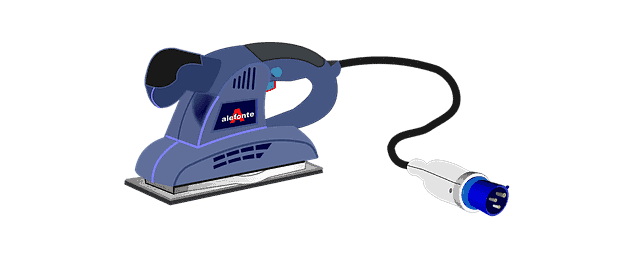
Regular sanders work in an orbiting pattern, and Random sanders work unpredictably. There are no scratch marks left when working with a random orbital sander.
The size of the sanding pad determines the surface area it can work on. The standard size is the ¼ sheet sander. Random orbital sanders work better on large surface areas, using them on a cabinet or cupboard.
Taking a closer look at what some sander tools do, you might notice that they do not give a perfect finish, which is clear in activities involving paint removal. As much as orbital sander comes with discs, not all of them have the same motion capability.
The reason is: the discs come in different models. Some of them lack the sanding faces that spin in the same movement. These will be ideal for rough surfaces. There are also big Orbital sanders that need you to use both hands.
Pros
- Versatile
- Handy
- Give a smooth finish.
- Lightweight
- Great for removing paint and stain
Cons
- Slow
- Removes less material
Palm Sander
A Palm sander is a powerful tool used to finish any wood piece. The type of sandpaper determines the number of materials you can work on. A final look that is polished is what you get.
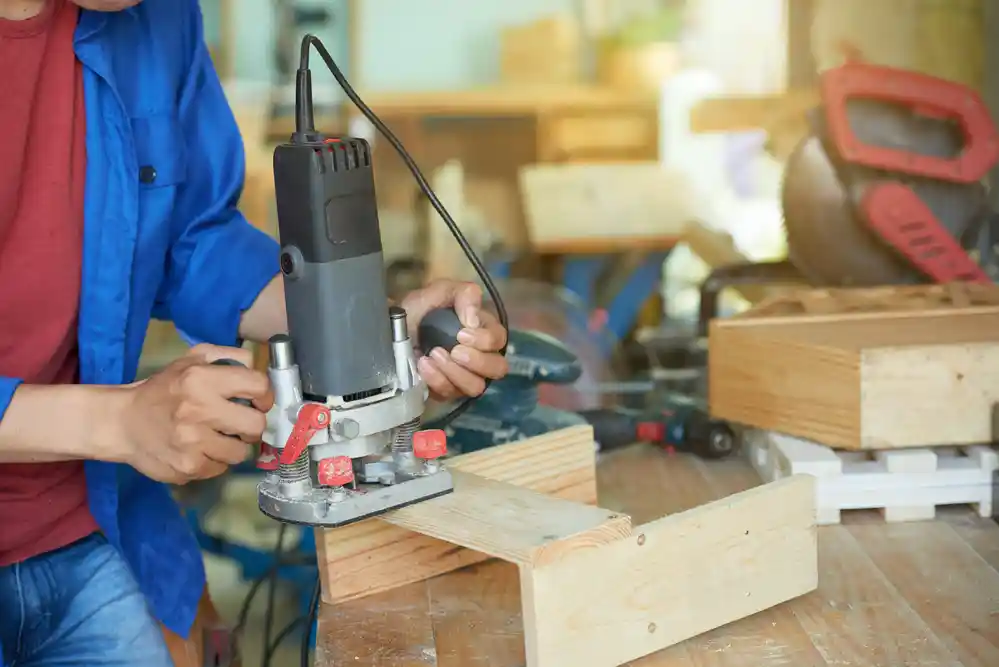
The machine comes with pins that you can use to take a quarter sheet of the standard sandpaper. You will use a pair of scissors to cut the sandpaper.
A knife can be a substitute. You can get up to four pieces depending on how you cut the sandpaper. The sandpaper vibrates when you are holding it, moving back and forth.
It uses a variety of hooks than the Orbital sander. The hooks give you precision in matching the holes with the inside holes used for dust collection.
I advise you to apply less pressure when working with the Palm sander, which eliminates the spinning movement.
The absence of spinning motion slows down the performance. The weight on the tool is required for better performance and a little bit of energy from your hand to run the back-and-forth movement.
The palm sander is small. The type of sander you will have is comfortable, has a dust collection feature, and is easy to use.
Pros
- Smaller
- Lightweight
- It works well on smaller pieces
- It uses a variety of hooks
- Affordable
Cons
- Slow on large surface areas
- Very small
Main Features
- Dust collection bags
- Sandpaper
- Power and speed
Orbital Sander
Dust collection bags
The random orbital sander has a round sanding pad with round sanding discs that you can attach to the pad using a hook. The holes on the discs are the ones that collect dust while you are polishing. It is important to remember to empty the dust bag.
Sandpaper
When you are using an Orbital sander, you can use any sandpaper. It is excellent in terms of cost as you can compare prices, and availability means attractive prices.
Power and speed
The reason why Orbital sanders attract steeper prices is that they have used more power. The measuring unit is in amps, and the more power the machine operates, the faster it becomes.
Palm Sander


Dust collection bags
All sanders come with collection bags. However, Palm sanders with a vacuum will be ideal. An ideal tool will be the Genesis GP080 Palm sander with a vacuum, replacement sandpaper, and dust-proof switch (Source).
Sandpaper
The type of sandpaper determines the number of materials you can work on. A quarter sheet of sandpaper is the standard when using the Palm sander. You will not use the entire sandpaper at once, and you can get up to four pieces of sandpaper. The sandpaper has a way of vibrating when you are holding it.
Power and speed
Power determines speed. Less power is used with the Palm sander, which might be why it comes at affordable prices. However, some models use more power and have more incredible speeds.
What could be better?
Orbital Sander
The Orbital sander could have been quicker in removing material.
Palm Sander
It could have been bigger.
Similarities orbital sander vs palm sander
- They both work in orbiting motion.
- You can find any of the two sanders under any budget.
- The Orbital and Palm sanders have dust collection bags.
- They work on wood
- Ease of use to independent users
- They have the same surfaces.
- They are hand-held
- They use standard sandpaper
Key Differences between an orbital sander and a palm sander
- Orbital sanders are square-shaped, whereas Palm sanders come rectangular.
- Orbital sanders are heavier than Palm sanders. Palm sanders are very small and lightweight.
- As the name Orbital implies, the Orbital sander gives you circular orbiting movements, whereas the Palm sander only moves in orbiting motion. This means that the item will move back and forth as it is pulled by gravity toward another object. It creates a circular way in which the object keeps going around. In other words, orbiting movements are circular movements (Source).
- Palm sanders work well on smaller pieces since it is also smaller than the Orbital machine.
- Orbital sanders are great on bigger items. They do not take long. This is why I recommended smaller pieces for Palm sanders.
- Palm sanders are way smooth than Orbital sanders.
- The orbital sander eliminates dust, but the Palm sander performs better.
- You can use a variety of hooks for Palm sanders than on Orbital sanders.
- A palm sander is more affordable than an Orbital sander.
Cost Comparison: orbit sander vs palm sander
An Orbital sander is more expensive than a Palm sander. You can have a Palm sander under 50, whereas an Orbital budget starts ranging from 100. The Orbital sander comes at a steeper price because it has many facilities. You can have a model that has an attractive warranty or lower grit.


The Rigid R2601 5-inch Orbit Sander is above 50. It has a better dust collection feature, and the base offers a powerful grip to multiple grip points. The speed control dial range from 7,000 to 12,000, giving you a fast experience. It has a limited three-year warranty (Source).


The Black+Decker Orbit Sander has an attractive price below 50 with a limited 2-year warranty (Source). The Black + Decker Electric sander is below 30, which does not mean that it is lesser than the mentioned models. It has a dust collector and good gripping (Source).
Pro Tip: You may also like Belt Sander vs Orbital Sander.
Final Verdict | Palm sander vs orbital sander
An Orbital sander is a versatile tool. If you are working on a piece that does not need to be painted after polishing, you can opt for the hand sander, which works better on finished surfaces. An orbital sander is ideal if you are working on larger surfaces. Smaller items are also easier to polish with the palm sander. If you are on a tight budget, the hand sander is better, while the orbital sander is ideal for a beginner.
So which one is right for you? That depends on the task at hand. If you need a random orbital sander for general purposes, an orbital sander is probably the best choice. However, a hand sander is better if you are looking for something more specialised – like detail work or finishing.

- Grain and Sheen: Teak Oil versus Danish Oil Uncovered - January 10, 2024
- The Cherry on Top: Crafting the Perfect Cutting Board - January 9, 2024
- Polyurethane Water-Based vs Oil-Based: Choosing the Right Finish - January 8, 2024
