Updated September 19, 2026 · Routing guidance checked against Dremel attachment manuals, Dremel routing accessories, and current Dremel project guidance.
This refresh keeps the original answer intact, but adds the missing quick answer, bit guide, step-by-step setup, limits, FAQs, and internal Dremel links so readers can decide when a Dremel router setup makes sense.
Quick Answer: Can a Dremel Be Used as a Router?
Yes, a Dremel can be used as a small router when fitted with a router attachment and compatible Dremel router bits. It works best for light routing tasks such as grooves, inlays, decorative edges, signs, and small craft projects. It should not replace a full-size router for deep cuts, large surfaces, joinery, or heavy material removal.
Best Dremel Router Bits to Use
Dremel routing uses standard 1/8-inch / 3.2 mm shank high-speed-steel router bits made for wood, chipboard, laminate, soft plastics, plexiglass, and thin rubber. The five families below are the ones most readers will reach for first when turning a Dremel into a light-duty router.
| Bit model | Bit family | Typical working diameter | Best use | Example project |
|---|---|---|---|---|
| 650, 652, 654 | Straight router bit | 650 = 1/8 in / 3.2 mm; 652 = 3/16 in / 4.8 mm; 654 = 1/4 in / 6.4 mm | Straight flat-bottom grooves, small rebates, trench grooves, dados, and small mortises | A magnet recess in a cutting board, a tray divider dado, or a tiny hinge recess in a keepsake box |
| 612 | Piloted beading bit | 3/8 in / about 9.5 mm | Decorative beaded edges on small panels, box lids, and plaques | A decorative bead on the edge of a wooden gift-box lid |
| 615 | Piloted rounding-over bit | 3/8 in / about 9.5 mm | Smoothing or rounding square edges on small parts | Rounding basswood carving blanks or easing plaque edges |
| 640 | V-groove bit | 1/4 in / 6.4 mm, V profile | V-shaped decorative grooves, sign lines, borders, and accent grooves | Guidelines for painted sign lettering or a V-groove frame border |
| 655 | Keyhole bit | 1/4 in / 6.4 mm keyhole profile | Narrow hanging slots and hidden fastener slots | A keyhole slot on the back of a wall rack or organizer |
All official Dremel router bits use a 3.2 mm / 1/8-inch shank. That small shank is also the main performance limit: a normal woodworking router uses larger 1/4-inch or 1/2-inch bits, while Dremel routing is built for compact detail work. If you need a broader bit overview, see what are the different Dremel bits used for.
How to Use a Dremel as a Router
Before starting, disconnect the Dremel from power for assembly. Clamp your workpiece to a bench; do not hold the work in one hand and the router in the other. Wear eye protection, a dust mask, and hearing protection.
Step 1. Fit the correct 1/8-inch collet and router bit
With the tool unplugged, press the shaft-lock button, loosen the collet nut, and insert the router bit shank fully into the 1/8-inch / 3.2 mm collet without clamping the flutes. Tighten the collet nut securely. For wood depth and pass guidance, see can a Dremel cut wood – here are the wood depth and pass settings.
Step 2. Mount the 335-01 plunge router attachment
Remove the Dremel nose cap, fit the bit and collet, then seat the rotary tool into the Dremel 335-01 plunge router attachment. Thread the mounting nut onto the tool nose and tighten it firmly so the body does not twist during the cut.
Step 3. Set your zero-depth reference
Rest the plunge base on scrap from the same material, lower the bit until it just touches the surface, and set that position as your zero reference. This gives you a consistent starting point before dialing in the actual groove depth.
Step 4. Cut in shallow passes
Do not remove more than about 3 mm / 1/8 inch in one pass. If you need a deeper groove, make several passes and lower the bit a little each time. Pushing a Dremel too deep in one cut causes chatter, burning, bit slip, and rough edges.
Step 5. Use the edge guide or a clamped fence
For straight grooves, use the edge guide that comes with the plunge router attachment, or clamp a straight scrap board as a fence. Freehand routing is fine for decorative work, but straight grooves wander quickly without a guide.
Step 6. Set RPM and ease into the cut
Use mid-range speed for most wood and lower speed for plastics so they do not melt. Start with the base slightly tilted so the side of the bit engages gradually, then bring the base flat and upright once the cut is established. For broader rotary-tool context, see what are Dremel tools used for.
Step 7. Feed against the bit rotation
Feed the tool steadily against the bit rotation rather than letting it pull itself forward. Move slowly, keep both hands on the plunge handles, and pause if the wood starts to burn or the bit begins to chatter.
Step 8. Retract cleanly and maintain the attachment
At the end of the pass, retract the bit while the tool is still running, then let the motor stop fully before setting it down. Wipe dust from the guide posts and keep the plunge action smooth with light maintenance.
What a Dremel Router Is Good For
Light decorative edge profiles on small craft blanks. A Dremel router setup is useful for a bead, roundover, or small chamfer on a gift box, plaque, picture-frame edge, or basswood blank.
Small grooves for magnets, hinges, and inlays. Jewelry boxes, tray dividers, magnet recesses, and small inlay grooves are the right scale for a Dremel router.
Keyhole and picture-hanging slots. A keyhole bit and plunge base cut cleaner hanging slots than a drill-and-chisel approach on small wall projects.
Sign lettering, V-groove layouts, and decorative guide grooves. The 640 V-groove bit can create consistent lines for painted sign lettering, border grooves, and layout accents.
Portable light routing. If you already own a compatible Dremel, the 335-01 attachment is a compact way to try routing without buying a full-size router. If you are still choosing a tool, see what Dremel should I buy.
Limitations: When to Use a Real Router Instead
If your project involves any of the six limits below, skip the Dremel-as-router setup and use a full-size router, laminate trimmer, or router table instead.
- Deep cuts over 1/4 inch total or over 1/8 inch per pass. The small 1/8-inch bit shank and compact motor are not made for heavy depth.
- Large surfaces or long production runs. A Dremel can do a small craft edge; it is not efficient for a tabletop, long board, or repeated furniture-length profiles.
- Real joinery. Mortise-and-tenon joints, dovetails, box joints, and structural rebates need the stiffness and bit options of a real router setup.
- Heavy material removal or flattening. If you are flattening a slab, hogging out a large blank, or removing a lot of wood, use a router, carving burr, or another heavier-duty tool.
- Bit profiles outside Dremel’s small routing range. Full-size routers support many more profiles, including ogees, flush-trim bits, rabbets, raised panels, and larger coves.
- Repeatability across many identical parts. The Dremel plunge base is fine for hobby pieces, but production runs are better handled on a stiffer router base or table.
FAQs
Can a Dremel be used instead of a router?
For light, small-scale tasks, yes. With a Dremel 335-01 plunge router attachment and compatible 1/8-inch shank router bits, a Dremel can cut decorative edges, grooves, inlays, V-groove sign lines, and keyhole slots. It cannot replace a full-size router for joinery, deep cuts, large surfaces, heavy stock removal, or repeated production work.
What Dremel attachment do I need for routing?
The main Dremel attachment for routing is the Dremel 335-01 Plunge Router Attachment. It mounts to compatible Dremel rotary tools and gives you two handles, a plunge base, depth control, an edge guide, and better visibility for small routing work. Dremel also has router-table style options for bench-mounted light routing.
What router bits fit a Dremel?
Dremel router bits need a 3.2 mm / 1/8-inch shank for the standard Dremel collet. Common Dremel routing bits include straight bits, piloted beading bits, piloted roundover bits, V-groove bits, and keyhole bits. Larger 1/4-inch or 1/2-inch router bits do not fit a Dremel rotary tool.
Can a Dremel cut grooves in wood?
Yes. With straight router bits such as 650, 652, or 654, plus the 335-01 plunge attachment and an edge guide or clamped fence, a Dremel can cut small flat-bottom grooves in wood. Keep the cut shallow, use several passes, and feed slowly to avoid burning, chatter, or bit slip.
Can a Dremel router cut deep?
A Dremel plunge router attachment can physically plunge deeper than many small craft cuts require, but practical cutting depth is limited. Remove only about 3 mm / 1/8 inch per pass, and avoid deep joinery or heavy grooves. If the project needs a deep, wide, or structural cut, use a full-size router.
Is a Dremel router good for beginners?
Yes, a Dremel router setup can be a good beginner introduction to light routing because it is small, visible, and less intimidating than a full-size router. Beginners should still clamp the work, use shallow passes, avoid climb cutting, wear protection, and treat the spinning bit with the same caution as any router.
Yes. You can use a Dremel as a router if you use the proper attachment or bit. The Dremel works as a router, but it does not cover large surfaces. A wide range of routing bits to choose from is what you get. Know what your material requires before you pick a bit. Each tool can and cannot do some tasks.
Can I use my Dremel as a router?
The Dremel tool can do all the tasks the router does, but it cannot deliver the same quality on a large scale in woodworking. Dremel is an ideal tool for detailed tasks, like freehand engraving and making low profiles on edges. It is less practical if you want to take off more than 1/8inch of material at a time.
Smaller jobs such as decorating ornaments like jewelry boxes and gift boxes are ideal for the Dremel tool. There is a wide range of Dremel bits to choose from and attachments. That allows you to be creative as you get different profiles, cuts, and grooves.
Although both tools are high-speed and high RPM rotary/spinning tools, they have differences that separate them. The difference comes in the bit that is attached to the rotary tools. Use any of the mentioned tools for any task with the right bit. These include cutting, sanding, engraving, and carving.
The two have common usage since they are versatile tools. With the Dremel router attachment, you can turn your rotary tool into a well-functioning router. There is no limit to what the router delivers.
You cannot find yourself buying a new tool when you can use the one you have to finish your project. A full-size router does tasks that a small Dremel tool cannot depend on size and power.
Planning or milling rough lumber stock down flat, cutting joints, carving, and shaping large pieces of material are some of the tasks the router completes with ease. That does not mean a Dremel cannot cut grooves, inlays, and profile edges. It does, at a slow and tedious rate.
Full-size routers are more practical, efficient, and effective for woodworking than Dremel. Not enough material is removed at a time. That is minimal performance on a large or standard size wood. When a Dremel tool is under a high load, there are high chances for the bit to slip out of the chuck. That destroys your piece of wood, and you get a new one.
Can a Dremel use router bits?
Yes. This attachment converts your Dremel Multi-Tool into a plunge router when woodworking or doing other DIY projects involving routing. It negates the need for a separate plunge router tool. This attachment allows you to use your tool to route circles, cut letters and signs, and inlay work.
Hold your Dremel tool in one hand, and take the router bit with your other hand. Start inserting the bit inside your Dremel.
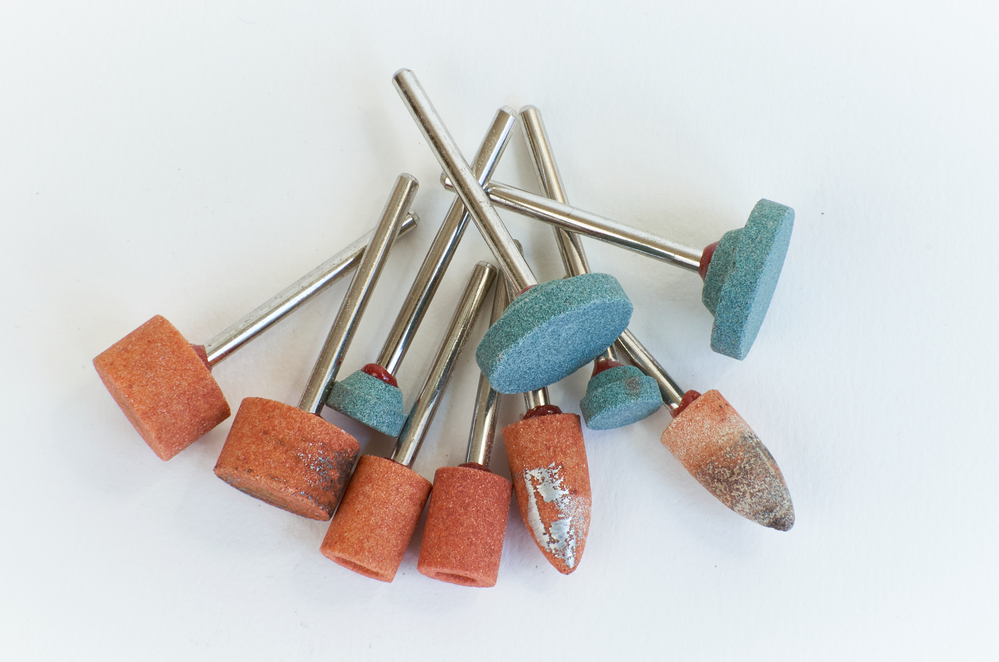
Choosing router bits for Dremel
There is the straight bit, piloted bit, rounding-over bit, v-groove but, and the keyhole bit. The bit makes straight cuts and square bottomed grooves such as trench grooves.
A v-groove bit makes v-grooves and the keyhole bit narrow slots. It is ideal for decorative work. Anything hung on the wall is made by the v-groove bit. There is a guide called piloted bit that keeps the bit in place.
There are two main kinds. The first (612) is a piloted beading bit for decorative work. A piloted rounding-over bit (615) is for smoothing edges. A v-groove bit (640) cuts decorative V-shaped grooves, while the keyhole bit (655) cuts narrow slots. It routs grooves into picture frames or anything else that needs to be hung.
Many routers come with interchangeable ¼ and ½ inch collets, but some accept only ¼ inch shank bits. Use bits with ½-inch shanks for better stability with less vibration, produce a smoother cut, and have longer cutter life.
Choosing a Dremel router table
The router table attachment converts your Dremel tool into a bench-mounted tool for precise routing, shaping, and sanding. With a smooth table surface, it performs slotting, edge trimming, grooving, and sanding of conventional or irregular shapes. The plastic knobs are for easy tool assembly and depth adjustment.
It also features easy-to-grip plastic knobs with a screwdriver slot for easier tool assembly and depth adjustment. The adjustable fence is for versatile performance.
Dremel plunge router attachment
There is a need for a plunge router attachment when routing. It converts your Dremel multi-tool into a plunge router, and there is no need for a separate plunge router. The attachment routes circles, cut letters, and signs. It also works for inlay work.
In woodwork, the Dremel attachment is for DIY projects that include routing. It is ideal for woodworking projects to cut decorative edges, straight slots, route circles, inlay work, or route freehand. The edge guide comes with a plunge router attachment. The clear base on the attachment allows greater visibility of your work surface.
The plunge router attachment has a shield shipped opening there and the locking button that has to be placed in the opening when the router is attached. The Dremel 335-01 plunge router is compatible with the 4300 Dremel high-speed rotary tool.
Turn your corded Dremel rotary tool into a compact plunge router and cut perfect decorative edges. The compact Plunge Router is for lighter routing projects. The transparent base allows you to rout with visibility.
Dremel router project ideas
There are many projects you can do using a Dremel. They range from beginner to advanced. Be sure to wear safety glasses. Check out some of our favorite Dremel projects to try at home. Engraved glass makes a beautiful gift for any occasion. You can freehand a design or create a template guide to trace and follow.
Carving wooden spoons are excellent Dremel projects for beginners. Use a wooden board to shape and create your spoon. It is easy, and you can design it to add to your personality. Dremel makes rock carving a little easier. Use a silicon carbide grinding stone attachment for softer rocks, while harder rocks require a diamond bit. All you need is the rotary tool, bits, a bowl of water, and a clamp.
Turn an ordinary plain candle into a beautiful piece of art with this project. Draw or print your design, then use a thick needle to pierce the pattern design. Remove the paper and work using a Dremel engraver attachment on a low setting.
Woodworking projects can be simple, depending on the design or pattern. All you need is the wood, a Dremel, carving tips, engraving tips, sandpaper, and paint or finish.
Sources Checked for This Refresh
- Dremel routing guide for official beginner routing workflow, bit families, 335-01 attachment use, and safety framing.
- Dremel routing accessories page for official routing application and accessory context.
- Dremel 335-01 Plunge Router Attachment manual for setup, feed direction, and safety checks.
- Dremel 231 Shaper/Router Table manual for bench-mounted light routing context.